

What Is a COB LED Light? Types, Uses & Buying Guide

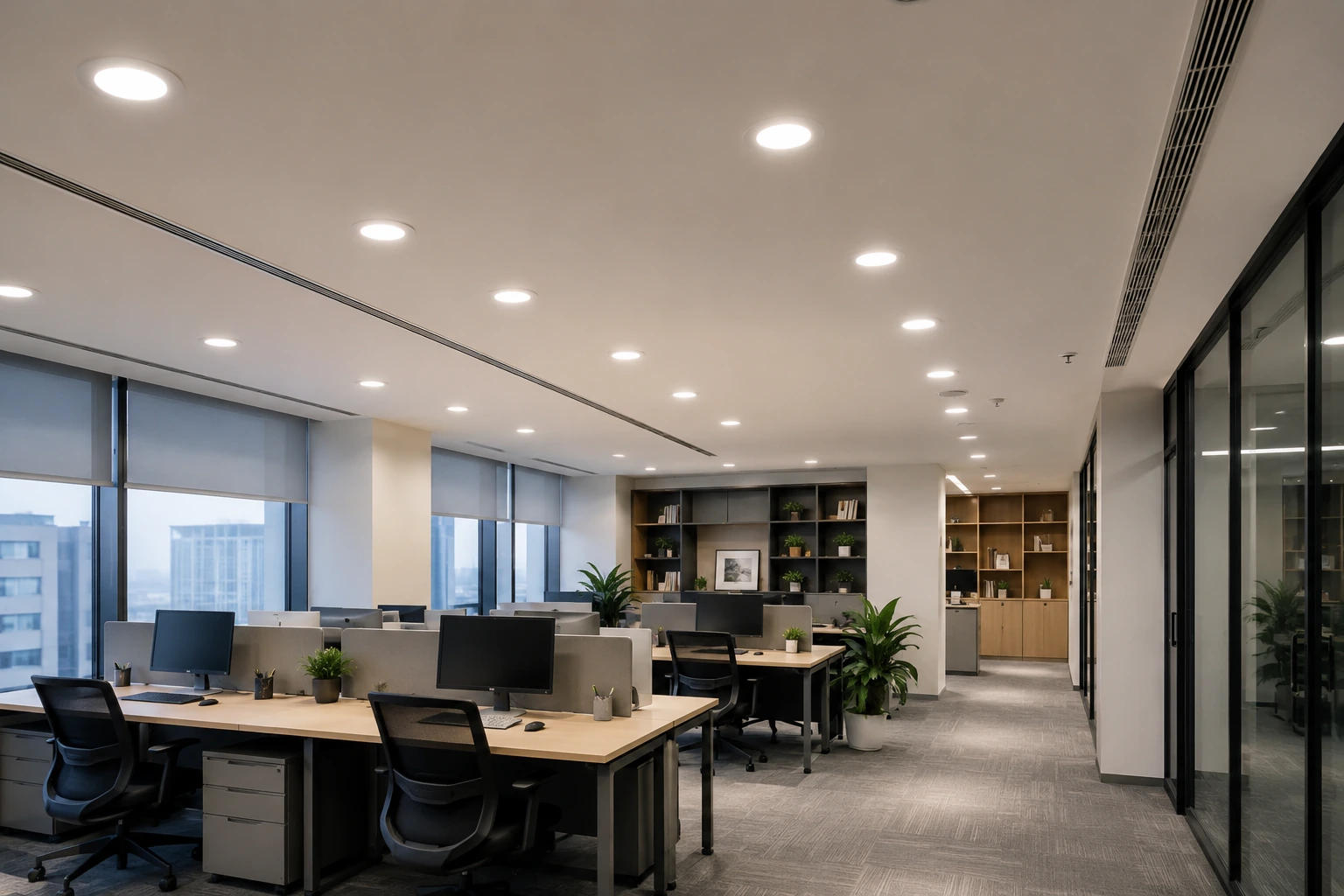
Anyone shopping for LED lighting eventually runs into the term “COB.” It appears on downlights, panels, work lights, and grow lights alike. The spec sheets rarely explain what it means or why it matters for your space.
This guide breaks down what a COB LED light is and how it compares to SMD. It also covers which COB light type — panel, work, grow, track, or wall — fits your project, so distributors and contractors can recommend the right fixture with confidence instead of guessing at datasheets.
What Is a COB LED Light?
COB is an abbreviation for “chip on board.” Manufacturers build a COB light by mounting multiple bare LED chips directly onto a single substrate. Older LED types package each chip separately; COB does not. The chips sit close enough together that they behave as one continuous light source instead of individual points, which is why COB fixtures produce a smooth, uniform beam with no visible hot spots or gaps.
How COB LED Technology Works
Once the chips are mounted, manufacturers apply a single phosphor coating across the entire array to convert the raw blue light into the white color temperature the fixture is rated for. Because the chips share one thermal path to the substrate, COB modules dissipate heat more evenly than boards using separately packaged chips — one reason COB fixtures tend to hold their lumen output longer over their rated lifespan. Lumileds’ technical overview of COB LEDs covers the chip-on-substrate construction in more depth for anyone specifying at the component level.
COB vs SMD LED: What Is the Difference
SMD (surface-mounted device) LEDs package each chip individually with its own leadframe and lens, then space those packages across a board. That spacing is what gives SMD strips and bulbs their characteristic dotted look under close inspection. A COB style LED skips the individual packaging entirely, so the light reads as one continuous surface rather than a row of points.
| Factor | COB LED | SMD LED |
|---|---|---|
| Light output | Uniform, dotless beam | Visible individual points |
| Heat handling | Shared thermal path, efficient | Heat spread across separate packages |
| Best for | Focused, high-intensity applications | Flexible strips, color-changing setups |
COB Fixture Types and Where They Are Used
COB Panel Lighting
The panel format mounts the chip array behind a diffuser to spread light evenly across a ceiling or work surface. A COB LED panel light is a common choice for offices, retail counters, and showrooms where a flat, glare-free spread matters more than a focused beam.
COB for Job Sites and Workshops
A COB work light trades the diffuser for raw output, putting the chip array’s full brightness to use on job sites, in garages, and in workshops where portable, high-lumen illumination matters more than aesthetics.
COB for Grow Spaces
Because COB chips produce high lumen density from a compact source, a COB LED grow light can deliver the intensity plants need without the multiple fixtures a comparable SMD setup would require, making it a space-efficient option for grow tents and shelving.
COB for Track and Display Lighting
A COB LED track light pairs the technology’s focused output with an adjustable head, which is why it is common in galleries, retail displays, and any space where the beam needs to move with the merchandise. For smaller-scale accent needs, Hyundai Power’s COB spot light range covers the same focused-beam approach in a compact, single-fixture format — the 12W COB spot light is a solid starting point for most retail or display setups.
COB Wall and Accent Lighting
Mounted low on a cob light wall fixture, the same dotless beam works as accent lighting — washing a feature wall evenly instead of leaving the scalloped shadows that spaced-out LEDs can create.
How to Choose the Right COB Fixture
Match the fixture to the job before comparing wattage numbers. A panel or wall fixture should prioritize even spread and a diffuser rated for glare control; a work light or track light should prioritize lumen output and beam control instead. Across every category, check the CRI rating (85+ for retail and display work) and match the heatsink to the chip’s rated wattage — COB’s efficient thermal path only helps if the fixture around it puts it to use.
For distributors briefing a customer, a quick rule holds: recessed and surface-mount jobs favor a diffused COB LED panel light, while anything needing a directed, portable beam calls for a COB style LED without the diffuser.
Whatever the application, the fixture’s job is the same: turn a chip-on-board array into consistent, even light without the visible dots or hot spots that separately packaged LEDs can leave behind. Matching the COB type to the space — panel, work, grow, track, or wall — is what delivers that consistency where it counts.
That is the difference between a fixture that just meets a wattage spec and one that actually fits the room. Ready to select a fixture? Browse the COB fixture range for options across every use case covered above.
Frequently Asked Questions (FAQs)
Is COB LED brighter than SMD?
For the same wattage, yes — COB LED typically produces higher lumen density because the chips sit closer together with less space lost between them, giving a brighter, more concentrated beam than a comparable SMD array.
Does COB LED technology run hot?
COB fixtures generate heat, like any LED, but their shared thermal path spreads it more evenly across the substrate than individually packaged chips. A properly sized heatsink keeps that heat from shortening the fixture’s lifespan.
How long do COB fixtures typically last?
Chip quality and heatsink performance determine a COB fixture’s lifespan, typically 25,000 to 50,000 hours. Fixtures with undersized heatsinks tend to fall short of that rating.
Can COB lighting be used outdoors?
Yes, provided the fixture carries an appropriate IP rating for moisture and dust exposure. Indoor-rated panel and work light COB models are not built for outdoor use without that added protection.
What does “COB-style” mean if it is not a true COB chip?
Some fixtures are marketed as COB-style for their dotless look without using true chip-on-board construction. Checking the spec sheet for an actual COB chip designation is the only reliable way to confirm the technology inside.