

LED Down Light in Pakistan: Homes & Commercial Guide

What Is an LED Down Light?
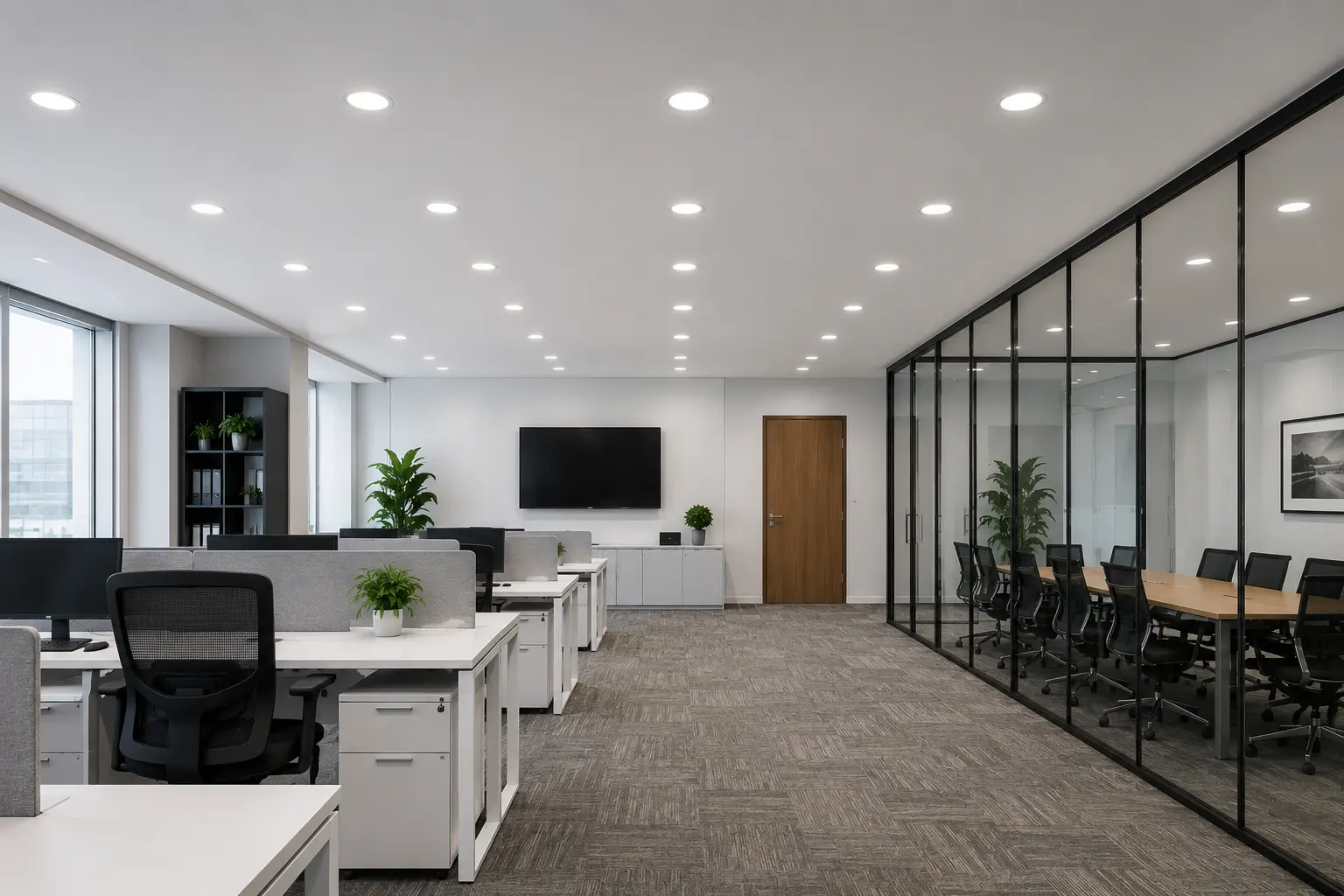
An LED down light is a ceiling fixture that sends brightness straight downward, rather than scattering it outward like a traditional light bulb or tube light. It’s commonly installed in false ceilings, offices, shops, showrooms, bedrooms, lounges, and kitchens — anywhere a clean overhead light source is needed without a visible fixture hanging below the ceiling line.
Quick Summary
- LED down lights are recessed or surface-mounted ceiling fixtures used in homes, offices, shops, and commercial interiors.
- Wattage alone doesn’t tell you brightness — lumens do. Both matter, along with color temperature, cut size, and placement.
- Recessed, surface-mounted, COB, and adjustable are the main types available.
- In Pakistan specifically, voltage instability affects LED driver lifespan, so build quality and surge tolerance matter more than in markets with stable grid power.
Why LED Down Lights Have Become the Standard Choice
Two things are driving the shift to LED lighting in Pakistan: rising electricity costs and demand for more modern interiors. Older ceiling fixtures are steadily being replaced with ones that draw less power for the same, or better, brightness.
Many buyers compare LED lights price in Pakistan before choosing, but price shouldn’t be the only factor. Brightness output, body material, color temperature, and warranty terms determine how a fixture performs a year or two later — not just how it looks in the showroom. A cheap unit can dim noticeably or fail within months if the internal driver can’t handle local grid conditions.
LED light wattage is central to this decision. Get it wrong, and a room ends up too dim to work in or too harsh to relax in.
Wattage and Lumens: Why You Need Both
Wattage tells you how much power a fixture draws — not how bright it actually looks. Two 12W down lights from different manufacturers can produce noticeably different brightness, depending on the LED chip quality inside. Lumens are the actual measure of light output, so checking both figures together gives a more accurate picture than watts alone.
Wattage and Lumens Reference:
- 7W ≈ 500–600 lm — Small rooms, corridors, bathrooms, decorative accents
- 12W ≈ 900–1,000 lm — Bedrooms, lounges, kitchens, small offices
- 18W ≈ 1,400–1,600 lm — Larger rooms, offices, shops, reception areas
- 24W ≈ 1,900–2,200 lm — Commercial spaces, showrooms, halls, larger ceilings
For most medium-sized rooms, a 12W fixture with the right lumen output is a sensible starting point.
A Local Consideration: Voltage Stability and Driver Quality
Voltage fluctuations and surges are common across much of Pakistan, and a fixture’s driver — the small internal component regulating power to the LED chip — absorbs the brunt of that instability. A poorly built driver wears down faster, leading to flickering, early dimming, or failure well before its rated lifespan.
When comparing fixtures, surge protection specs and a warranty that reflects real confidence in the driver matter more than the price tag. Energy efficient LED light bulbs with a solid driver often cost more upfront but save money over time.
Types of LED Down Lights
- Recessed — sits inside the ceiling for a smooth, built-in look. Suited to false ceilings in bedrooms, lounges, offices, and showrooms.
- Surface-mounted — fixed directly onto the ceiling surface. Useful on concrete ceilings where recessing isn’t practical, and common in corridors and commercial spaces needing quick installation.
- COB (chip-on-board) — throws a tighter, more concentrated beam. Good for product displays, reception areas, and retail spaces where directed light matters more than soft ambient spread.
- Adjustable — the beam can be tilted after installation, useful for highlighting artwork or display counters without a separate spotlight fixture.
Choosing Color Temperature
- Warm White (2700–3000K) — Bedrooms, lounges, restaurants, cozy interiors
- Natural White (4000K) — Offices, kitchens, shops, general indoor spaces
- Daylight (6000K+) — Work areas, commercial spaces, showrooms, study rooms
Homes generally lean toward warm or natural white; offices and shops tend to do better with natural white or daylight.
Best Uses in Homes and Offices
Down lights work well across bedrooms, living rooms, kitchens, and bathrooms, distributing light evenly without competing visually with the ceiling. Bedrooms suit warm white; kitchens and study areas need better task visibility with natural white or daylight.
In offices, a handful of well-placed down lights often outperforms a dense grid of fixtures — even lighting, no ceiling clutter, no workspace glare. In retail and hospitality, pairing down lights with panel lights creates layered lighting that highlights displays without leaving the rest of the space dim.
How Many Fixtures Does a Room Need?
There’s no universal formula — it depends on room size, ceiling height, fixture wattage and lumens, and layout. A small bedroom might need only a couple of fixtures; a large office or showroom needs several placed evenly to avoid dark corners or glare spots.
Buyer Checklist
- Wattage — Controls power draw
- Lumens — Shows actual brightness; check alongside wattage, not instead of it
- Color Temperature — Affects mood and visibility
- Beam Angle — Controls how the light spreads
- Cut Size — Must match the ceiling opening for recessed fixtures
- Driver Quality / Surge Tolerance — Affects lifespan under local grid conditions
- Warranty — A useful signal of manufacturer confidence
Common Mistakes to Avoid
- Choosing wattage without checking lumens. Two fixtures at the same wattage can differ meaningfully in actual brightness.
- Ignoring color temperature. Warm, natural, and daylight change a room’s entire feel.
- Skipping cut-size verification. The ceiling opening has to match the fixture size exactly for recessed installs.
- Poor spacing. Too far apart leaves dark patches; too close together looks cluttered and turns harsh.
Beyond Down Lights: Related LED Options
A few related product categories are worth knowing about when furnishing a space with LED down lights. A smart LED bulb adds app or voice control for lamps and fixtures outside the ceiling plan, and picking the best smart LED bulb usually comes down to dimming range, scheduling features, and how well it holds its level of brightness over time. Compared with an old incandescent bulb, a smart LED option delivers far greater energy savings while adding remote control on top.
Availability of smart LED bulb in Pakistan has grown, with several models now supporting local voltage standards directly. Checking the smart LED bulb price in Pakistan against the wattage and lumen output on offer is worth doing before buying, the same way it’s worth doing for down lights themselves. For long, open runs like garages or kitchens, LED tube lights are a separate category worth comparing on price, since tube lights and down lights serve different layout needs.
Final Verdict
An LED down light is a sound choice for anyone wanting modern, clean, energy-efficient ceiling lighting — across homes, offices, shops, showrooms, restaurants, and hotels. The best option isn’t the cheapest one on the shelf; it’s the one matched to room size, ceiling type, actual brightness need (wattage and lumens together), and how well it holds up on the local grid over time.
Frequently Asked Questions (FAQs)
A ceiling fixture that directs brightness downward, commonly used in homes, offices, shops, showrooms, and commercial spaces.
Yes — they provide modern, even ceiling lighting, use less electricity than traditional fixtures, and keep the ceiling looking clean.
It depends on room size and lumens output, not wattage alone. A 7W fixture may suit a small space, while 12W, 18W, or 24W fixtures suit larger rooms or commercial areas — check the lumens rating alongside the wattage.
Yes — they’re well suited to offices, shops, and showrooms because they give bright, even, professional-looking lighting.
Wattage, lumens, color temperature, cut size, beam angle, body material, driver/surge quality, and warranty.