

LED Flood Light Wattage Guide

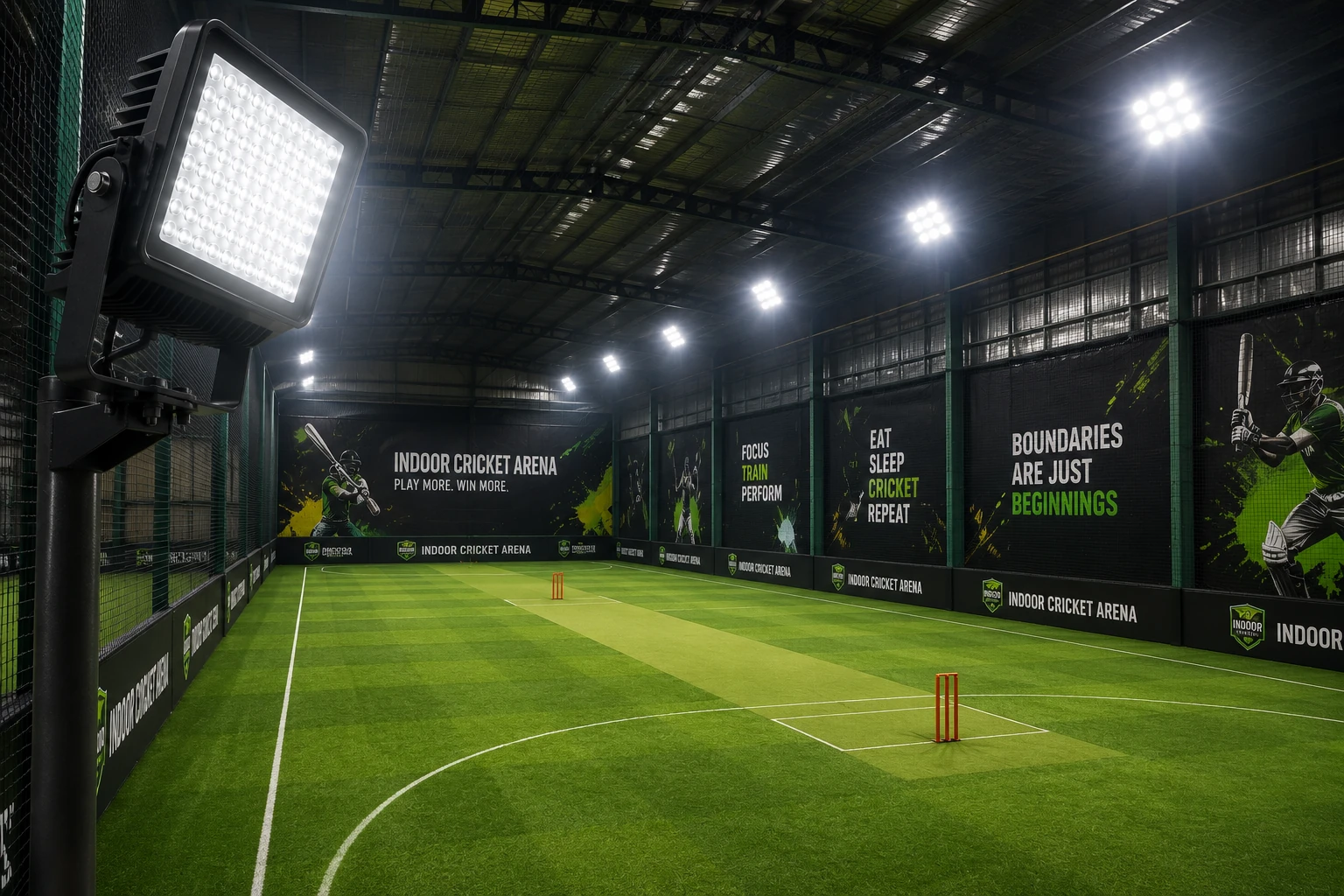
How to Choose the Right LED Flood Light Wattage for Any Space
LED flood light wattage usually runs from about 10–50W for signage and small entrances up to 200–240W for warehouse yards and sports courts. The right figure depends on area size, mount height and lumen output—not on picking the biggest number. Beyond that, choosing an outdoor light tends to go one of two wrong ways. Buy too much power and the result is wasted money and glare complaints; buy too little and dark corners appear where a camera should see. For contractors and facility managers the fix is the same either way: match the wattage to the job. This guide explains how wattage really works, how to match it to an area, and which fixture type suits each use-case.
Watts vs. Lumens: What LED Flood Light Wattage Really Tells You
The first thing to unlearn is that watts equal brightness. With older halogen fittings that was roughly true, but an LED draws far less power for the same output, so wattage now measures energy use, not light. Brightness is measured in lumens. A modern flood light delivers the same usable light as a much higher-wattage halogen while cutting the energy bill. That is why a 400W metal-halide unit is often replaced by a 150W LED with no loss of coverage—a 62% drop in power for the same result. This is also why quality LED flood lights are rated by both figures on the box: lumens for brightness, watts for power draw. The practical takeaway: read the lumen figure for output, and treat wattage as a guide to running cost and the size of area a fixture is built for.
Matching Wattage to Your Space
Once lumens and watts make sense, the choice comes down to area size and mounting height. A compact 12v 50w led flood lights setup is ideal for a garden, a sign or a small entrance, where a low-voltage supply is safer and cheaper to run. Step up to a mid-range fixture for a driveway or loading bay. At the top end, a 240w led flood light is built for large yards, warehouse exteriors and sports courts where a single unit has to cover a lot of ground. The rule of thumb is simple: measure the area and the mount height first, then pick the wattage that delivers the matching lumens—rather than reaching for the biggest number on the shelf.
Two more figures are worth a glance before ordering:
- Colour temperature (kelvin) sets the look — 4000K–5000K reads as a crisp neutral white for car parks and work areas, while warmer tones suit a façade.
- Beam angle decides spread — a wide angle blankets an open yard, a narrow one reaches a distant boundary.
Choosing the Right Fixture by Use-Case
Application matters as much as raw output. A led security flood light is usually paired with a motion sensor, so it stays off until movement is detected—handy for both deterrence and energy saving around entrances and perimeters. For roads, access lanes and long driveways, a led street flood light throws light forward along a path rather than in a wide circle, cutting wasted spill. Some jobs instead need a single target picked out, such as a billboard, a flagpole or a building sign. For these, a led projector flood light uses a tighter, directed beam to put light exactly where it is wanted. Naming the job before choosing the fixture is what separates a clean install from an expensive redo.
Quick Wattage Selection Table
| Area / task | Typical wattage | Approx. lumens | Best fixture type |
|---|---|---|---|
| Garden, signage, small entrance | 12V 50W | 5,000–6,500 lm | Low-voltage flood |
| Driveway, loading bay | 100–150W | 13,000–20,000 lm | Standard flood |
| Large yard, warehouse, sports court | 200–240W | 26,000–33,000 lm | High-output flood |
| Perimeter, doorway | 30–100W + sensor | 4,000–13,000 lm | Security flood |
| Road, access lane | 50–150W | 6,500–20,000 lm | Street flood |
| Sign, façade, single target | 50–150W | 6,500–20,000 lm | Projector flood |
Getting the Decision Right
The hard part of any buying decision is the messy middle—too many options and not enough clear criteria. Cutting through it comes down to three questions: how big is the area, how high is the mount, and what is the light actually for? Answer those and the right LED flood light wattage usually picks itself. Match the wattage to the coverage, match the fixture type to the task, and confirm the ingress rating—look for IP65 or higher on anything mounted outdoors. It is also worth checking the warranty and the housing; a die-cast aluminium body sheds heat better and lasts longer in the weather than cheaper plastic. In Pakistan, where mains typically runs at 220–230V and load-shedding is common, it also pays to ask about solar or hybrid flood light options that keep entrances and yards lit during an outage. Get those points right and the install performs for years with almost no attention. For current wattages and pricing on specific models, browse the LED flood light range on the product pages.
Frequently Asked Questions (FAQs)
What wattage LED flood light do I need for a warehouse yard?
A large warehouse yard or sports court usually needs a 200–240W LED flood light, delivering roughly 26,000–33,000 lumens. Mount it high enough to spread light evenly, and use more than one fixture for very wide areas rather than a single over-driven unit.
Is a 100W LED flood light bright enough for a driveway?
Yes. A 100–150W LED flood light (about 13,000–20,000 lumens) suits a standard driveway or loading bay. For a short residential driveway, 50–100W with a motion sensor is often enough and cheaper to run.
How many watts replace a 400W metal-halide flood light?
A 150W LED flood light typically replaces a 400W metal-halide unit with no loss of coverage—about a 62% cut in power for the same brightness.
What is the difference between lumens and watts?
Watts measure how much power a fixture draws; lumens measure how much light it produces. Compare lumens for brightness, and use wattage as a guide to running cost and the size of area a fixture is built for.