

LED Panel Light for Home & Office – Bright, Sleek & Energy Efficient

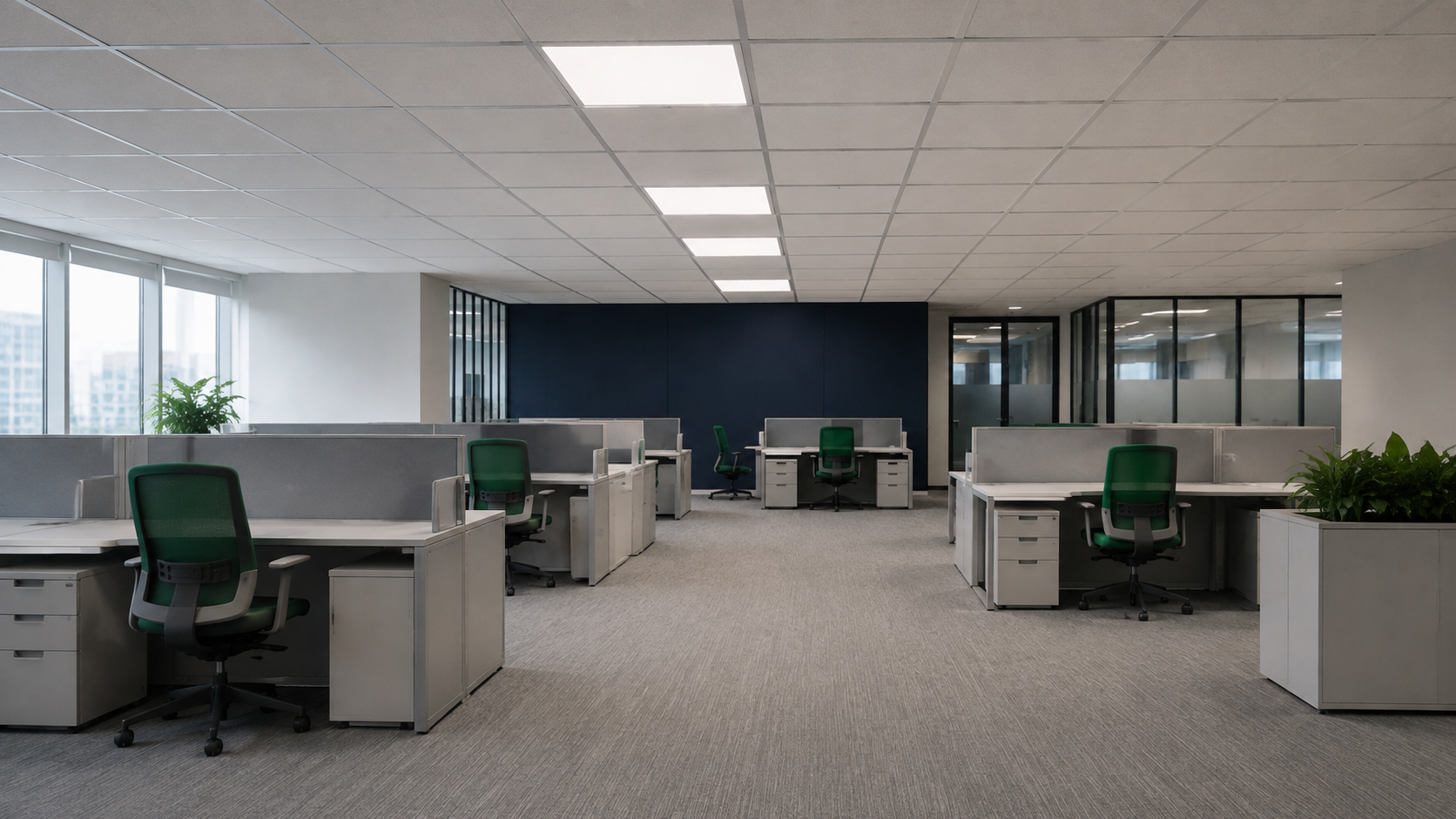
Backlit vs Edge-Lit: What Changes Inside
Two panels can share a wattage, a size and a shelf price, and still be built in completely different ways. That construction split decides efficacy, lifespan and how the ceiling looks after two years.
A backlit build sits the LED array directly behind the diffuser, firing straight down. An edge-lit build hides the LEDs along the frame and pushes light across a light-guide plate.
Backlit panels generally hold their output longer and run at higher efficacy. Edge-lit panels are slimmer and cheaper, which is why they dominate volume tenders.
Standard Sizes and the 600×600 Grid
Panel size is not really a free choice. It is set by the false-ceiling grid the fitting has to drop into, so the ceiling drawing comes before the datasheet.
A 2×2 LED panel light is the default across Pakistani commercial ceilings because the standard T-bar module matches it tile for tile.
- 600×600 mm (2×2 ft) — offices, clinics, banks, showrooms. The volume size.
- 300×1200 mm (1×4 ft) — corridors, narrow bays, retail aisles.
- 600×1200 mm (2×4 ft) — halls, warehouses, large open floors.
- Round and square slim panels — for gypsum ceilings with no grid at all.
Pro tip: confirm whether the grid is a true 600 mm module or a nominal 2×2 ft one before releasing a bulk order. The few millimetres decide whether panels sit flush or rattle.
Recessed, Surface-Mount or Suspended
Mounting method is the second thing to lock, because it changes the accessory list rather than just the appearance.
- Recessed — drops straight into the grid. Needs enough ceiling void above the tile.
- Surface-mount — for concrete soffits or solid gypsum with no void. Requires a surface frame kit.
- Suspended — wire kits from an exposed slab, common in open-ceiling offices and high bays.
The surface frame is a separate line item, and it is the accessory contractors most often forget. Order frames with the panels, not after the crew is already on site.
Void depth is the quiet constraint on recessed work. A shallow ceiling that clears the panel body but not the driver box forces the crew to improvise fixings on site, and improvised fixings are what sag first.
On gypsum without a grid, check the fixing method before the order rather than after. Slim panels are light, but a plasterboard ceiling still needs proper anchors rather than screws driven straight into the sheet.
UGR and Glare in Offices
Glare is where cheap panels get rejected. Screens, gloss desks and long shifts make discomfort glare obvious by mid-afternoon, long before anyone checks a lux meter.
The measure to quote is the unified glare rating, which scores discomfort glare from a fitting in an interior space.
For offices and classrooms, specify a low-UGR LED panel light at UGR<19. A micro-prismatic diffuser controls glare far better than a plain milky sheet at the same wattage.
The figure has to be on the datasheet to mean anything. Suppliers who quote a UGR value have measured the fitting; suppliers who describe a panel as anti-glare without a number usually have not.
Lumen Output to Match Panel Size
Wattage describes running cost. Lumens describe the deliverable. Efficacy between suppliers varies enough that two 40 W panels can sit 700 lumens apart on the same ceiling.
A 2×2 LED panel light in the 36–40 W band typically covers a 9–12 square metre office bay at office lighting levels.
| Size | Typical wattage | Output | Suits |
|---|---|---|---|
| 300×300 mm | 12–18 W | 1,000–1,800 lm | Cabins, washrooms |
| 600×600 mm | 36–40 W | 3,200–4,000 lm | Offices, clinics |
| 300×1200 mm | 36–40 W | 3,200–4,000 lm | Corridors, aisles |
| 600×1200 mm | 60–72 W | 5,500–7,200 lm | Halls, warehouses |
Driver Placement and Serviceability
Most panel failures are driver failures. The diodes usually outlive the electronics by years, so the question worth asking a supplier is where the driver actually sits.
An external driver box on a flying lead can be swapped above the tile in minutes. A driver integrated into the frame means the whole panel comes down and goes back to the supplier.
Buy a small percentage of matching spare drivers with any large order. Panel light driver replacement is cheap on day one and impossible three years later when the model has changed.
Specifying an LED Panel Light in Pakistan
Site conditions decide what survives. Feeder voltage swings well outside nominal on many local networks, and load-shedding switches these fittings far more often than a stable grid would.
That makes the driver input range the line to check first. A wide 140–260 V window survives here; a narrow 220 V-only rating quietly fails in the first hot season.
Ask for three figures on every quotation: lumens per panel, the UGR value, and the driver location with its warranty term. The full Hyundai panel range covers the standard grid sizes in both backlit and edge-lit builds.
| Check | Why it matters |
|---|---|
| Confirm construction | Backlit holds output longer; edge-lit runs slimmer and cheaper. |
| Match the grid | Measure the T-bar module before ordering in bulk. |
| Order frames together | Surface and suspended mounting need kits panels do not include. |
| Specify UGR<19 | Offices and classrooms reject high-glare diffusers fast. |
| Check driver access | External boxes are serviceable; integrated drivers are not. |